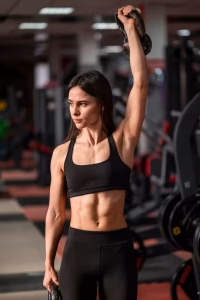
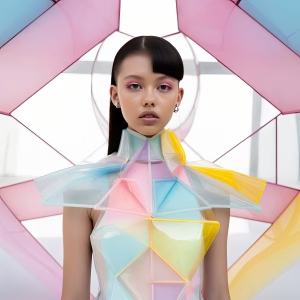
Model casting is a fundamental process in the fashion industry where designers, brands, photographers, or agencies evaluate potential models for upcoming projects. Think of it as a job interview specifically tailored for the modeling world, where your look, presentation, and sometimes personality are assessed to determine if you’re the right fit for a particular campaign, runway show, or photoshoot.
The basics of model casting
At its core, a model casting is an opportunity for decision-makers to see models in person before making hiring choices. During these sessions, models typically present their portfolios, demonstrate their walk (for runway opportunities), and showcase their ability to pose and embody different emotions or concepts.
Castings vary significantly depending on the type of modeling job. A commercial casting for a friendly, relatable advertisement will differ greatly from a high-fashion editorial casting seeking dramatic, avant-garde expressions. Understanding the specific requirements for each casting opportunity helps models prepare appropriately and increases their chances of success.
The casting process creates a necessary bridge between creative vision and practical execution. While photographs and digital portfolios provide a starting point, in-person castings allow clients to see how models move, interact, and respond to direction – elements that static images simply cannot capture.
Things you must know about a model casting
Walking into your first casting can feel intimidating, but understanding the typical process helps demystify the experience. Most castings follow a similar structure, though details may vary by project type and market.
When you arrive, you’ll usually check in with a coordinator who will take your information and possibly a digital photo for reference. You might receive a number or be added to a list – this helps organize the often large number of models being seen that day.
The waiting period is typically the longest part of the process. You may wait anywhere from 30 minutes to several hours, depending on the casting’s size and organization. Use this time to observe other models, review any materials you’ve been given about the job, and mentally prepare yourself.
When it’s your turn, you’ll typically enter a room where one or more people will evaluate you. This might include the client, designer, photographer, art director, or casting agent. The actual evaluation usually falls into several potential categories:
- Walkthrough: For runway castings, you’ll demonstrate your walk, sometimes with specific instructions about pace or style.
- Presentation: You’ll present your portfolio, comp card, or digital portfolio.
- Measurements: Your height, bust/chest, waist, and hips may be measured to ensure you fit sample sizes.
- Digital photos: Simple, unposed photos may be taken to record your current look.
- Brief interview: You might answer a few questions about your experience or availability.
- Script reading or speaking: For commercial work that involves speaking parts.
Most surprisingly to newcomers, the actual evaluation portion is typically very brief – often just a few minutes or even less. Don’t be discouraged by the brevity; experienced casting directors can make assessments quickly, and the short interaction doesn’t necessarily reflect your chances of being selected.
After your evaluation, you’ll usually be thanked and dismissed. Rarely will you receive immediate feedback or a booking confirmation at the casting itself. Instead, selected models are typically notified by their agents in the following days.
What are you expected to wear
Your attire for a casting is crucially important as it forms part of your first impression. The general rule is simple, fitted clothing that shows your figure clearly without distracting from your natural attributes. However, specific guidelines vary by casting type.
For general castings and go-sees, a standard “model uniform” has emerged:
- Women typically wear form-fitting jeans or black pants with a simple, fitted top or t-shirt. Heels (usually black) are standard, as they showcase how you carry yourself and emphasize your height.
- Men usually wear well-fitted jeans or pants with a simple t-shirt or button-down. Clean, simple footwear completes the look.
For specific casting types, these guidelines may change:
- Runway castings: The standard model uniform applies, but women should definitely bring heels for walking demonstrations.
- Swimwear/underwear castings: Models should bring the appropriate undergarments. Women often bring a simple bikini; men bring fitted shorts or swimwear.
- Commercial castings: Slightly more approachable, everyday clothing that shows personality while remaining simple.
Across all casting types, certain principles remain constant. Avoid excessive jewelry, distracting patterns, or logos that pull focus from you. Keep makeup minimal for women (usually just light foundation, mascara, and lip balm) to show your natural features. Hair should be clean and simple, typically worn down for women unless otherwise specified.
“The goal is to present yourself as a blank canvas,” advises agency director Thomas Hughes. “Clients want to envision how you’ll look in their clothing or campaign. Overly styled looks or distracting outfits make that harder for them.”
Remember that specific instructions sometimes override these general guidelines. If a casting calls for “business attire” or “casual beach wear,” follow those directions carefully. When in doubt, ask your agent for guidance on appropriate casting attire for specific opportunities.
How to perform best in a casting
Beyond knowing what to wear and what to expect, certain preparations can significantly improve your casting experience and outcome:
Research the client or brand beforehand to understand their aesthetic and values. This helps you tailor your presentation appropriately and demonstrates your professional interest.
Practice your walk, poses, and expressions regularly so they become second nature. Casting environments can be nerve-wracking, and muscle memory helps you perform confidently even when nervous.
Prepare a small bag with essentials: your portfolio or comp cards, a water bottle, touch-up makeup if needed, and comfortable shoes for traveling between castings.
Arrive early – about 10-15 minutes before your scheduled time. This allows for any unexpected delays while showing respect for the casting director’s schedule.
Maintain a positive, professional attitude throughout the process. The modeling industry is relationship-driven, and your behavior at castings contributes significantly to your reputation.
Remember that rejection is part of the process. Even top models book only a fraction of the jobs they cast for. View each casting as an opportunity to practice and improve rather than focusing solely on booking outcomes.
FAQs
What is a model casting?
A job interview for models where clients evaluate your look and skills for potential modeling jobs.
What to expect from a modeling casting?
Brief evaluation of your walk, portfolio, and measurements, with potential photos and simple questions.
What do models wear to castings?
Simple fitted clothes: jeans/black pants, basic tops, minimal jewelry, and clean hair with natural makeup.