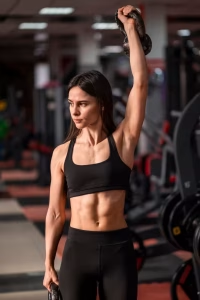
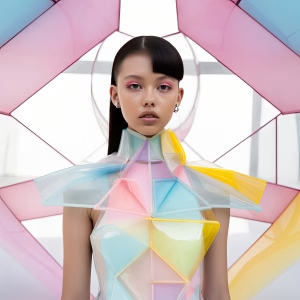
While traditional modeling focuses on showcasing products through photography and runway appearances, brand ambassadorship represents an expanded role where models become the living embodiment of a brand’s values and vision. This evolution creates exciting opportunities for models to develop deeper brand relationships and more sustainable income streams.
What are brand ambassadorship for models?
The modeling industry continues evolving beyond traditional photoshoots and runway appearances. Today’s most successful models often expand their careers by becoming brand ambassadors—professionals who represent companies through ongoing partnerships that showcase products while embodying brand values across multiple channels.
For models, brand ambassadorship represents a natural career progression that leverages existing skills while developing new ones. Rather than simply modeling products for specific campaigns, ambassadors maintain continuous relationships with brands, creating consistent content, appearing at events, and serving as the human face of the company’s marketing efforts.
This relationship benefits both parties. Models gain steady income, career stability, and deeper creative involvement with fewer one-off castings. Brands receive authentic representation from someone who genuinely understands and appreciates their products, creating more credible marketing that resonates with consumers.
The ambassador role particularly suits models who have developed personal brands and social followings alongside their traditional modeling work. This combination of professional modeling experience, personal audience, and brand affinity creates the perfect foundation for effective ambassadorship.
The evolving ambassador role for models
Brand ambassadors traditionally came from celebrity backgrounds—actors, athletes, or musicians lending their fame to products. Today’s ambassador landscape has diversified significantly, with models playing an increasingly prominent role for several compelling reasons:
Visual expertise: Models understand how to showcase products effectively through visual storytelling—a crucial skill in today’s image-driven marketing landscape. Their experience working with photographers, stylists, and creative directors translates perfectly to creating compelling content for brand partnerships.
Professional presentation: Trained models bring polished professionalism to brand representation, from event appearances to content creation. This experience navigating various professional environments makes them reliable representatives across multiple channels.
Authentic product integration: Models who regularly work with fashion, beauty, and lifestyle products develop genuine appreciation for quality and craftsmanship. This authentic connection translates into more convincing product promotion than purely commercial arrangements.
Diverse representation: As the modeling industry embraces greater diversity, brands gain access to ambassadors who authentically connect with varied consumer demographics. This representation allows for more inclusive marketing that resonates across different communities.
For models, this evolution creates opportunities to develop more sustainable careers with deeper brand relationships and consistent income beyond traditional modeling work.
Essential steps for models to become brand ambassadors
Transitioning from traditional modeling to brand ambassadorship requires strategic personal branding and relationship development. These steps help models position themselves for these valuable partnerships:
Building a distinctive online presence
While modeling agencies manage traditional booking opportunities, ambassadorships often develop through direct brand connections:
Content strategy development:
- Create a consistent posting schedule showcasing your modeling work and lifestyle
- Balance professional portfolio content with authentic personal moments
- Develop signature visual aesthetics through consistent editing and presentation
- Demonstrate versatility while maintaining a cohesive personal brand
Platform optimization:
- Maintain a professional Instagram profile with clear contact information
- Consider expanding to additional platforms relevant to your target brands
- Create content tailored to each platform’s unique format and audience
- Develop a professional website showcasing your portfolio and brand work
Audience cultivation:
- Engage authentically with followers through comments and messages
- Create content that encourages meaningful interaction and community
- Share industry insights and behind-the-scenes perspectives
- Develop a recognizable voice that complements your visual aesthetic
This digital foundation serves as your continuous portfolio, demonstrating not just your modeling capabilities but your potential value as a brand ambassador.
Strategic brand engagement
Before pursuing formal ambassador relationships, demonstrate genuine interest in brands that align with your personal style:
Authentic product integration:
- Naturally incorporate products you genuinely use into your content
- Create professional-quality imagery featuring these products
- Tag brands appropriately without appearing overly promotional
- Share thoughtful reviews or experiences with products you love
Community participation:
- Engage meaningfully with brand content through comments and shares
- Participate in brand challenges or campaigns as a community member
- Attend brand events when possible, connecting with team members
- Join relevant conversations around brand initiatives or launches
Value-added content:
- Create tutorials or styling content featuring brand products
- Share unique perspectives on how products fit into your professional life
- Develop creative concepts that showcase products in fresh contexts
- Offer insights that help brands connect with your specific audience
This organic engagement demonstrates both your genuine appreciation for the brand and your ability to create compelling content—essential qualities for potential ambassadors.
Developing a defined personal brand
Successful brand ambassadors bring their own distinctive identity to partnerships:
Niche identification:
- Determine where your modeling specialty intersects with personal interests
- Focus on specific categories where you have genuine expertise
- Develop content themes that consistently reflect this specialization
- Become recognizable for particular styles, aesthetics, or perspectives
Story development:
- Craft a compelling personal narrative about your modeling journey
- Connect your background to your current professional focus
- Share milestones and growth experiences that shaped your career
- Develop signature storytelling approaches across your content
Value alignment:
- Clearly communicate the principles important to your work
- Demonstrate these values consistently through content choices
- Engage with causes and initiatives that reflect your beliefs
- Build a reputation for authenticity and principle-driven choices
This personal branding creates a clear value proposition for potential brand partnerships—you bring not just modeling skills but a distinctive perspective and established audience relationship.
Leveraging modeling industry connections
Your existing modeling career provides valuable pathways to ambassadorship:
Client relationship development:
- Maintain professional connections with brands you’ve modeled for
- Express interest in deeper brand involvement beyond single bookings
- Demonstrate reliability and professionalism during every interaction
- Follow up after projects with gratitude and continued engagement
Agency partnership:
- Discuss ambassador representation with your modeling agency
- Ask about existing ambassador programs with agency clients
- Request consideration for repeat bookings with favorite brands
- Develop relationships with agency staff handling brand partnerships
Industry networking:
- Connect with stylists, photographers, and creative directors
- Attend industry events where brand representatives gather
- Join professional organizations for models and influencers
- Participate in industry conversations through panels or workshops
These existing connections often provide the most direct path to ambassador opportunities, as brands prefer working with models who already understand their aesthetic and values.
Pursuing formal ambassador programs
Many brands maintain structured ambassador programs open to models:
Research opportunities:
- Identify brands that align with your personal aesthetic and values
- Investigate whether they have established ambassador programs
- Review current ambassadors to understand selection criteria
- Determine application procedures and timing windows
Application preparation:
- Create a professional media kit highlighting your modeling experience
- Compile engagement statistics and audience demographics
- Develop a customized pitch explaining your unique value to the brand
- Prepare a portfolio of content featuring their products (if applicable)
Professional outreach:
- Follow application guidelines precisely
- Connect with appropriate contacts rather than generic submissions
- Demonstrate knowledge of the brand’s history and current initiatives
- Clearly articulate how you would represent their values
Follow-up protocol:
- Send a professional thank-you after submitting applications
- Check status appropriately without excessive contact
- Remain gracious regardless of outcome
- Maintain relationship for future opportunities
This formal approach complements organic relationship building, demonstrating your serious interest in official representation.
The brand ambassador experience for models
When you secure a brand ambassadorship, expect a structured relationship with specific expectations and benefits:
Typical ambassador responsibilities
Brand ambassador duties typically include:
Content creation: Regularly producing photos, videos, and written content featuring brand products according to a predetermined schedule and guidelines. The frequency varies by contract but often includes multiple posts monthly.
Event representation: Appearing at brand launches, store openings, fashion shows, and industry events as the brand’s official representative. This may include speaking engagements, meet-and-greets, or demonstration responsibilities.
Product feedback: Providing honest input on new products, sometimes participating in pre-launch testing, and offering insights from both personal experience and audience feedback.
Community engagement: Responding to comments and questions about the brand on your channels, participating in brand-related conversations, and building community around the brand’s values and products.
Exclusivity compliance: Adhering to category exclusivity agreements that prevent partnerships with competing brands during the contract term. These restrictions vary widely by agreement.
The specific balance of these responsibilities depends on the brand’s needs and your particular strengths as a model and content creator.
Compensation structures for model ambassadors
Ambassador arrangements typically offer more stable income than traditional modeling:
Retainer models: Monthly payments for ongoing representation and a specified content quota, typically ranging from $1,000-$10,000+ monthly depending on your reach and the brand’s size.
Hybrid arrangements: Base compensation plus performance bonuses tied to engagement metrics, sales generation, or audience growth.
Equity partnerships: Some long-term ambassador relationships include stock options or profit-sharing, particularly with emerging brands betting on future growth.
Product compensation: Particularly in early career stages, compensation may combine financial payment with substantial product allowances.
Fee-per-deliverable: Payment structures tied to specific content pieces, appearances, or campaigns rather than time-based retainers.
These arrangements typically involve contracts spanning 6-12 months, providing more stability than traditional modeling bookings while allowing periodic renegotiation as your value increases.
Balancing ambassador work with traditional modeling
Most model ambassadors maintain multiple professional avenues:
Contract flexibility: Negotiate ambassador agreements that accommodate traditional modeling bookings, especially important for agency-represented models.
Category exclusivity: Structure ambassador relationships in different product categories to avoid conflicts (for example, representing a skincare brand and a fashion label simultaneously).
Agency communication: Keep your modeling agency informed about ambassador commitments to prevent scheduling conflicts and potential contract violations.
Portfolio diversification: Use ambassador content to enhance your modeling portfolio, demonstrating versatility and commercial appeal to traditional clients.
Career progression: View ambassadorships as complementary to, rather than replacements for, traditional modeling work—each strengthens the other when managed strategically.
This balanced approach creates career sustainability while expanding your professional opportunities beyond the traditional modeling framework.
Leveraging ambassadorships to expand your modeling career
Strategic brand partnerships provide platforms for career advancement beyond the specific relationship:
Skill expansion: Ambassador roles develop valuable skills in content creation, public speaking, and brand strategy that enhance your value across all modeling work.
Industry positioning: Long-term brand relationships demonstrate reliability and professionalism, qualities highly valued by modeling clients beyond your ambassador partners.
Audience development: The consistent visibility from ambassador programs builds personal following that attracts additional modeling and ambassador opportunities.
Network growth: Regular brand events and initiatives connect you with industry decision-makers across multiple companies and sectors.
Category authority: Specialized ambassador relationships establish you as an expert in particular niches, creating opportunities for editorial features, speaking engagements, and consultation work.
The most successful model ambassadors view these relationships not as endpoint achievements but as strategic platforms for continued professional growth across multiple career dimensions.
Maintaining authenticity while representing brands
The most valuable model ambassadors balance professional representation with personal authenticity:
Selective partnerships: Choose brands whose products you genuinely appreciate and would use regardless of compensation.
Transparent communication: Be honest with your audience about sponsored relationships while expressing genuine enthusiasm for products you truly value.
Balanced content: Maintain a mix of sponsored and non-sponsored content that preserves your personal voice and perspective.
Constructive feedback: Provide private input to brands when products could be improved, demonstrating your commitment to quality rather than uncritical promotion.
Alignment protection: Decline partnerships that contradict your values or previous public positions, even when financially attractive.
This authentic approach builds long-term credibility with both audiences and brands, creating sustainable value that transcends individual partnerships.
The future of model ambassadorships
The ambassador landscape continues evolving, with several emerging trends particularly relevant to models:
Digital-physical integration: Ambassadors increasingly represent brands across both digital channels and physical experiences, requiring versatility beyond traditional modeling skills.
Community-building focus: Brands prioritizing ambassadors who build engaged communities rather than simply reaching passive audiences.
Measurement sophistication: Performance evaluation shifting from surface metrics like follower counts toward deeper engagement indicators and conversion impact.
Collaborative development: Models working with brands to co-create products rather than simply promoting existing lines, particularly in beauty and fashion sectors.
Value alignment emphasis: Increasing priority on authentic connection between ambassador values and brand mission beyond aesthetic compatibility.
Models positioning themselves at these intersections—developing community-building skills, demonstrating measurable impact, and articulating clear values—will find expanding opportunities in the evolving ambassador landscape.
Launching your ambassador journey
The transition from traditional modeling to brand ambassadorship represents a natural evolution that leverages your existing skills while developing new capabilities and relationships. By strategically building your personal brand, engaging authentically with preferred companies, and professionally pursuing formal opportunities, you can develop ambassador relationships that provide both career stability and creative fulfillment.
Remember that the most successful ambassador relationships grow from genuine connection rather than purely commercial considerations. Focus on brands whose products and values resonately deeply with your personal aesthetics and principles, creating partnerships built on authentic appreciation rather than mere opportunity.
With patience, professionalism, and strategic positioning, you can expand your modeling career into meaningful ambassador relationships that provide sustainable income, creative satisfaction, and valuable industry relationships for years to come.
FAQs
Do brand ambassadors get paid?
Yes, most brand ambassadors receive compensation, though payment structures vary significantly. Established models typically receive monthly retainers ranging from $1,000-$10,000+ depending on their reach and responsibilities. Newer ambassadors might receive product compensation plus smaller fees per post. Many arrangements include performance bonuses tied to engagement metrics or sales conversion alongside base compensation.
How many followers do you need to become a brand ambassador?
While follower requirements vary widely, most brand ambassador programs value engagement quality over raw numbers. Many brands work with micro-influencers (5,000-30,000 followers) who demonstrate high engagement rates (3-5%) and authentic audience connections. Models with professional portfolios can secure ambassadorships with even smaller followings by leveraging their industry experience, photographic skills, and established modeling credentials as additional value beyond audience size.
What exactly does a brand ambassador do?
Brand ambassadors represent companies through consistent content creation, event appearances, and authentic product promotion. Their responsibilities typically include: creating regular social media content featuring products, representing brands at industry events and store openings, providing feedback on product development, engaging with customers in online communities, participating in advertising campaigns, and maintaining category exclusivity during the contract term. Ambassadors essentially serve as the human embodiment of the brand’s values and aesthetic.