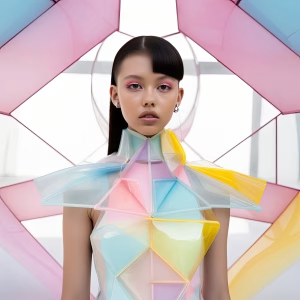
Featured model: Nataliia Pierina (view full profile on Modnet.)
Walking into your first model casting can feel like diving into the deep end. Your heart races. Your palms sweat. You wonder if you belong there at all. But with the right preparation, you can turn that nervous energy into your secret weapon.
What really happens at a model casting?
Model castings are essentially job interviews where your look, presence, and professionalism all matter. These industry auditions connect models with potential clients – from fashion designers and magazines to advertisers and brands.
Unlike what you might see in movies, most castings are surprisingly brief. You might spend hours preparing and traveling, only to have your actual audition last just a few minutes. Making those minutes count requires understanding the process.
Before you even walk through the door
Finding legitimate casting opportunities
The first challenge is finding real casting calls. Check reputable sources like:
- Modeling agency websites
- Industry platforms like Modnet
- Social media accounts of legitimate agencies and brands
- Casting director announcements
Always research the company before applying. Legitimate castings never charge application fees or require expensive portfolios purchased through them.
Preparing your portfolio essentials
Even as a beginner, you need basic materials to present yourself professionally:
- Digitals: Simple, well-lit photos showing your natural appearance
- Comp card: A modeling “business card” with your stats and best photos
- Portfolio book or digital portfolio: If you have professional work
For your first castings, focus on quality over quantity. A few excellent photos serve you better than many mediocre ones.
The day of your casting: A step-by-step walkthrough
Making a strong first impression
Your casting begins the moment you enter the building. Casting assistants often note how you interact with everyone – not just the decision-makers. Be polite to everyone you meet, from the receptionist to other models.
Arrive 10-15 minutes early, but not much earlier. Casting directors run tight schedules, and showing up too early can be as disruptive as being late.
The check-in process
When you arrive, you’ll typically:
- Sign in at a registration desk
- Submit your comp card or portfolio
- Complete any required paperwork with your measurements and contact details
- Wait until you’re called
Use waiting time productively. Review any materials about the client, mentally prepare your walk or poses, and stay calm rather than getting psyched out by other models.
In the spotlight: The audition itself
When it’s your turn, you’ll usually experience:
- A brief introduction where you state your name and agency (if represented)
- Basic instructions about what the client wants to see
- A demonstration of your runway walk if it’s a fashion show casting
- Several poses if it’s for print work
- Test photos or video to assess how you look on camera
- Possibly some brief questions about your experience or availability
The entire process might take just 2-3 minutes. Make each second count by being prepared, responsive, and professional.
Different types of castings require different approaches
Runway castings: It’s all in the walk
For fashion show castings, your walk is everything. Practice beforehand until it feels natural. Designers need to see:
- Confident, smooth strides
- Good posture and body awareness
- The ability to showcase garments effectively
- A strong final pose that displays the outfit well
Wear fitted clothing that shows your silhouette clearly, as casting directors need to imagine how designer clothes will look on your frame.
Commercial castings: Personality matters
For advertising and commercial work, clients look beyond your physical appearance to assess:
- How well you take direction
- Your ability to convey different emotions
- How relatable and authentic you seem
- Your speaking voice and communication skills
Be prepared to try multiple expressions or scenarios. Commercial clients often want models who can tell a story through facial expressions and body language.
Editorial castings: Versatility is key
Fashion magazines and editorial clients seek models who can transform. They typically evaluate:
- How well you understand different poses
- Your ability to create interesting shapes with your body
- How you work with light and shadow
- Your range of expressions and moods
Study editorial poses before attending these castings. Understanding fashion photography helps you deliver what these clients need.
The unwritten rules of model castings
What casting directors really notice
Beyond your look, professionals watch for:
- How you handle nervousness
- Your ability to take criticism or direction
- Whether you seem reliable and professional
- How quickly you adapt to requests
- Your energy level and enthusiasm
Even if you’re perfect for the look, attitude problems will get you rejected. A slightly less perfect model with great professionalism often gets the job over someone with the perfect look but difficult attitude.
Common mistakes that get models rejected
Avoid these frequent casting pitfalls:
- Overdoing makeup or styling when natural looks are requested
- Bringing friends or family to the casting
- Checking your phone during the audition process
- Asking too many questions about pay before being selected
- Arguing with or questioning directions you’re given
Remember that casting directors may be evaluating you for future opportunities even if you’re not right for the current project. Every interaction is a chance to build your professional reputation.
After the casting: Next steps
Once your casting ends, the waiting game begins. Most models hear nothing if not selected – silence is unfortunately the industry standard for rejection.
Rather than obsessing over results, focus on:
- Evaluating what went well and what could improve
- Updating your portfolio if you received positive feedback
- Preparing for your next opportunity
- Maintaining relationships with casting directors who responded well to you
Success in modeling comes from persistence. Each casting teaches you something valuable, whether you book the job or not.
How are model castings changing?
The casting process continues to evolve, with several new trends emerging:
- Virtual pre-screenings before in-person auditions
- Increased emphasis on social media presence and following
- Greater diversity in the types of models being selected
- More direct casting through social platforms rather than traditional agencies
Stay adaptable as the industry changes. What worked for models five years ago might not be effective today.
Your mindset matters most
Perhaps the most important casting tool isn’t in your portfolio but in your mind. Successful models approach castings with:
- Confidence tempered with humility
- Resilience when facing rejection
- Openness to feedback and direction
- Genuine passion for the craft
Remember that casting directors want you to succeed. They’re looking for solutions to their creative needs, and they hope each person who walks through the door might be the answer.
With preparation, professionalism, and persistence, you’ll maximize your chances at every casting opportunity. The modeling industry is competitive, but with the right approach, you can stand out for all the right reasons.
Common questions about model castings
What should I wear to a model casting?
For model castings, wear simple, fitted clothing that shows your figure clearly. Choose neutral colors like black, white, or gray – typically fitted jeans or leggings with a simple tank top or t-shirt. Avoid bold patterns, logos, or distracting accessories. For women, minimal makeup that enhances natural features works best, while men should be well-groomed. Wear shoes that are comfortable yet professional – heels for women attending runway castings, and clean, simple footwear for everyone else.
How can I prepare for the initial screening at a casting?
Prepare for the initial screening by researching the client or brand to understand their style aesthetic. Practice your runway walk, poses, and introductions before arriving. Bring a complete, organized portfolio and comp card. Get a good night’s sleep and stay hydrated to look your best. Arrive 10-15 minutes early with a positive attitude. Be ready to demonstrate versatility, and prepare answers to basic questions about your experience, availability, and why you’re interested in the particular project.
What are some common questions asked during a model casting?
Common questions during model castings include: “Are you represented by an agency?” “What is your availability during [project dates]?” “Do you have experience with runway/commercial/editorial work?” “Have you worked with similar brands before?” “Do you have any scheduling conflicts?” “Are you comfortable with [specific requirements] like travel/swimwear/particular poses?” “What are your current measurements?” “Can you tell us a bit about yourself?” Keep answers concise, positive, and professional, focusing on your relevant experience and enthusiasm for the opportunity.