Magazine ads, catalog pages, billboards, and product packaging all share something in common—they need real people to bring their messages to life. Print modeling stands as one of the most accessible branches of the modeling industry, welcoming diverse faces, body types, and ages.
Unlike the strict requirements of runway modeling, print work embraces variety. Companies need models who resonate with their target audiences, creating opportunities for nearly anyone with the right skills and determination.
Understanding print modeling categories
Before diving in, it helps to understand where you might fit in this diverse industry:
- Commercial modeling – Everyday people for advertisements and product marketing
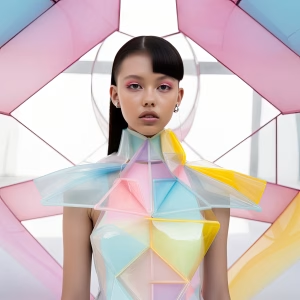
- Fashion print – Clothing and accessories in magazines and catalogs
- Parts modeling – Specialized work featuring hands, feet, or other body parts
- Plus-size modeling – Representing larger body types across various markets
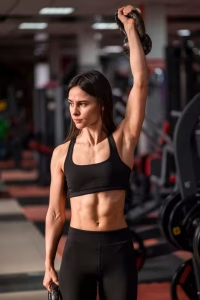
- Fitness modeling – Showcasing healthy, active lifestyles
- Mature modeling – Opportunities for those in their 40s, 50s, 60s, and beyond
Each category serves different clients and requires slightly different approaches. Identifying your strongest potential market helps focus your efforts where they’ll be most rewarded.
Building your modeling toolkit
Success in print modeling begins with developing the right assets and skills. Here’s what you’ll need:
Creating a professional portfolio
Your portfolio serves as your visual resume. Start with these essentials:
- Quality headshots – Clear, well-lit photos that showcase your face naturally
- Full-body images – Simple, fitted clothing that shows your proportions
- Range demonstration – Various expressions and poses showing your versatility
- Different looks – Multiple styling options to show your adaptability
While professional photography yields the best results, beginners can start with well-composed amateur photos in good lighting. As you progress, invest in sessions with photographers who specialize in model portfolios.
Developing essential modeling skills
Technical abilities separate working models from aspiring ones:
Posing technique – Learn to position your body in flattering, natural-looking ways that photograph well. Practice creates muscle memory that makes posing look effortless.
Facial expressiveness – Master conveying emotions subtly. What feels exaggerated in person often appears just right on camera.
Set etiquette – Show up prepared, on time, and ready to collaborate. Being pleasant to work with often matters more than perfect looks.
Physical stamina – Holding poses, working under hot lights, and maintaining energy throughout long shoots requires conditioning and endurance.
Finding modeling opportunities
With portfolio in hand and skills in development, you’re ready to pursue actual modeling work. Two main paths exist:
Agency representation
Signing with a reputable agency offers significant advantages:
- They connect you with vetted clients
- They handle negotiation and payment details
- They provide industry guidance and feedback
Research agencies specializing in print (not high fashion) and submit according to their guidelines. Expect to attend in-person meetings where agents assess not just your look but also your professionalism and personality.
Independent modeling
Working directly with clients offers another viable approach:
- Create profiles on legitimate modeling platforms
- Network with photographers, stylists, and art directors
- Develop your social media presence as a marketing tool
- Attend industry events and open casting calls
Many successful models combine both approaches, maintaining agency relationships while also developing their own connections.
Behind the scenes: The reality of print modeling work
Print modeling differs significantly from what most imagine. A typical photoshoot involves:
- Early call times and detailed preparation
- Multiple outfit and makeup changes
- Hours of work for just a handful of final images
- Direction from photographers and art directors
- Precise positioning and repeated adjustments
The work requires patience, physical control, and the ability to stay fresh-looking even when tired. For every glamorous minute captured in the final image, expect hours of meticulous preparation and repetition.
Navigating common challenges
Every modeling career faces obstacles. Preparing for these challenges helps you overcome them:
Rejection – Even established models book only a percentage of jobs they pursue. Learn to see rejection as redirection, not failure.
Inconsistent work – Print modeling rarely provides steady income, especially at first. Maintain alternative income sources while building your career.
Industry pressures – Maintain perspective about appearance standards and develop healthy self-image practices.
Business management – Track expenses, understand contract terms, and manage your finances professionally from the start.
Building long-term success
Models who enjoy sustained careers approach their work strategically:
- Continuously update your portfolio with your strongest recent work
- Develop industry relationships with repeat clients and collaborators
- Identify and leverage your unique selling points rather than trying to fit every market
- Stay adaptable as industry trends and client needs evolve
- Treat modeling as a business with professional standards and practices
Financial realities
Understanding the economics of print modeling helps set realistic expectations:
- Local print work typically pays $75-$500 per day
- Regional campaigns may offer $500-$1,500
- National advertising can pay $1,500-$10,000+ depending on usage rights
- Most beginners average 2-4 bookings monthly
- Usage rights, exclusivity, and campaign duration significantly impact rates
Most successful models combine print work with related opportunities like promotional events, fit modeling, or commercial acting to create sustainable income.
Your next steps
If print modeling appeals to you, take these practical first actions:
- Research your local market to understand opportunities and competition
- Begin building a simple portfolio showing your potential
- Study successful print models in categories similar to yours
- Practice posing and expressions to develop technical skills
- Connect with photographers seeking models for test shoots
- Prepare a basic modeling resume highlighting relevant experience
With dedication and strategic effort, print modeling offers accessible opportunities to participate in commercial media while developing valuable professional skills. The industry continues to embrace greater diversity, creating space for models who bring authenticity and relatability to their work.
FAQs
What are the requirements for print modeling?
Print modeling requires photogenic features, clear skin, the ability to take direction, and professional behavior. Unlike fashion modeling, height and measurements vary widely depending on the specific market.
Is it hard to be a print model?
The challenge lies more in persistence than difficulty. Success requires developing technical skills, building industry relationships, and handling rejection while continuously improving your portfolio.
How tall do you have to be to be a print model?
Print modeling has no standard height requirements. Models of all heights find work, though certain markets may prefer specific ranges. Commercial print typically welcomes heights from 5’4″ to 6’2″.
What do print models make?
Earnings range from $75-$500 for local work to $1,000-$10,000+ for national campaigns with extended usage rights. Most beginners work part-time, with income increasing as they build experience and reputation.