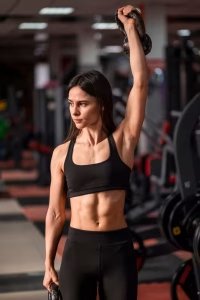
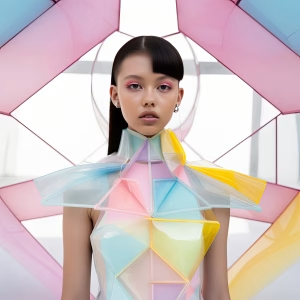
I watched an aspiring model’s career transform overnight after a single TikTok video went viral (and I’m sure I’m not the only one). Six months earlier, she couldn’t get agencies to return her calls. Now designers were sliding into her DMs, offering paid collaborations based solely on her digital presence. This isn’t an isolated incident—it’s the new reality of modeling in the social media age.
The modeling industry has undergone a seismic shift. What once required exclusive agency connections and expensive portfolio shoots now demands digital savvy and authentic online engagement. This evolution has democratized modeling while creating entirely new challenges and opportunities.
The rise of the digital portfolio
Remember when physical modeling portfolios were all that mattered? Those meticulously curated black books with glossy 8×10 prints that models lugged to every casting? They’ve been largely replaced by Instagram feeds and digital portfolios that clients can access with a quick tap.
This shift extends beyond convenience. Digital portfolios provide real-time updates, instantly reflecting new work, changing looks, and evolving styles. They also offer valuable metrics—data on which images resonate with audiences—something physical portfolios could never provide.
From anonymous to influential
The traditional modeling paradigm kept models as relatively anonymous vessels for clothing and products. Social media has flipped this dynamic entirely. Today’s successful models aren’t just faces—they’re personalities with engaged followers and persuasive power.
Consider the meteoric rise of models like Ashley Graham and Winnie Harlow, who used social platforms to challenge industry beauty standards. Their social media presence helped transform them from models into movements, proving that followers translate to bargaining power.
For newcomers, this means developing more than just photogenic features. You need a distinctive voice, consistent posting rhythms, and authentic engagement strategies. Agencies now routinely examine follower counts and engagement rates alongside traditional metrics like height and measurements.
The toolkit of the modern model
Building a compelling online modeling presence requires specific tools that streamline the digital experience:
Link-in-bio solutions
Since platforms like Instagram limit you to a single link, tools that create one-page websites from your single “link in bio” have become essential. These services consolidate all your important links—portfolio website, agency page, recent collaborations—into one accessible hub.
While paid options exist, free alternatives like Koji or Modnet (which is built specifically for models) provide clean, customizable landing pages that organize your digital ecosystem. The best options allow for analytics tracking so you can see which links generate the most traffic.
Portfolio websites
Despite social media’s dominance, dedicated portfolio websites remain crucial for serious models. These sites provide greater control over image presentation, organization by category, and professional credibility. Platforms like Format, Squarespace, Modnet, and Wix offer model-specific templates designed to showcase images beautifully across devices.
Content scheduling tools
Maintaining consistent social media presence requires planning. Tools like Later, Planoly, and Meta Business Suite allow models to batch-create content and schedule strategic posting times, maintaining visibility without constant phone checking.
The influencer-model hybrid
Perhaps the most significant evolution is the blurring line between models and influencers. This hybrid role combines traditional modeling skills with content creation and audience building.
This convergence has created new income streams. Models now earn from traditional bookings while supplementing with sponsored posts, affiliate partnerships, and digital content creation, opportunities that simply didn’t exist in the pre-social media landscape.
Finding your way out in the digital modeling space
Despite its opportunities, social media has introduced fresh challenges for models:
The pressure to constantly create content can lead to burnout. Unlike traditional modeling, where work happens during defined shoots, social platforms demand continuous feeding.
Algorithm changes regularly disrupt visibility strategies. What works today might be ineffective tomorrow, requiring constant adaptation and learning. Measurement metrics can become unhealthy obsessions. When your career depends partly on follower counts and engagement rates, these numbers can affect mental wellbeing.
The most successful digital-era models establish boundaries, pursue authentic content strategies rather than chasing trends, and remember that quality engagement often matters more than raw follower numbers.
The future: AI, virtual models, and community building
Looking ahead, several emerging trends will likely shape modeling’s digital future:
- Virtual models and digital avatars. Computer-generated models like Lil Miquela already secure real campaigns with major brands. While they won’t replace human models entirely, they represent a growing niche with unique applications.
- Community-centered modeling. Forward-thinking models are building communities rather than just audiences—creating spaces where followers connect with each other, not just with the model.
- AI-enhanced discovery. Artificial intelligence increasingly influences how brands discover new modeling talent, analyzing engagement patterns and visual consistency to identify promising newcomers.
The modeling industry’s social media transformation has fundamentally democratized opportunity. Geographic location matters less. Unconventional looks find their audiences easier. Direct client relationships form without agency gatekeepers.
For those trying to find their way in these wild times, success comes from embracing digital tools while maintaining the fundamental qualities that have always defined great models: professionalism, adaptability, and distinctive personal style.
The platforms may be new, but the essential goal remains unchanged: to compellingly showcase products and fashion through human presentation. Sign up to Modnet today and list your best photos and profile characteristics. Modnet is the only link-in-bio platform created for models.